
France announced Tuesday an extension until the end of the year and an expansion of financial aid for high-mileage drivers, in an effort to address the concerns of the French citizens hardest hit by surging fuel prices.
The assistance will be extended through the end of the year, and the number of potential beneficiaries will expand to 5.5 million people, the government announced in response to rising prices at the pump caused by tensions in the Middle East.
For recipients, the €100 grant "will cover the equivalent of 40 cents per liter of fuel for roughly two months," said French government spokesperson Maud Bregeon, who also serves as Minister Delegate for Energy.
Previously, 3 million people were eligible for the grant.
READ ALSO: How bad are the fuel shortages across France this week?
As for businesses, the cap on the fuel allowance—a tax-free bonus employers can offer their staff—will rise from €600 to €1,000, announced Serge Papin, Minister for Small and Medium-Sized Enterprises (SMEs).
The additional support for households and businesses announced Tuesday amounts to €450 million, according to Public Accounts Minister David Amiel.
"We recognize that this is a very tough situation for our fellow citizens," said Minister of Economy and Finance Roland Lescure, stressing that the spike is driven by external events. "It is beyond our control," he said.
Last week, the government had already extended support measures for fishermen, construction workers, and farmers, all of whom are heavy fuel users.
Stéphanie Rist, who also serves as Minister for Families, Autonomy, and People with Disabilities, also announced "special access to high-mileage driver aid" for home care workers, targeting "all those who use their personal vehicle, work part-time or more, and drive 30 km a day."
Help for healthcare workers
Minister of Health Stéphanie Rist also announced Tuesday the creation of an €80 "rural territory bonus" to help nurses who drive an average of over 100 kilometers (62 miles) per day pay for fuel.
"More than 25,000 nurses in our country will receive this €80 bonus," Ms. Rist stated during the government press conference on newly decided fuel relief measures.
It will be a "one-off payment for late 2026" and will be "means-test free," Ms. Rist's cabinet clarified to the press.
Nurses will also be able to "defer their Urssaf social security contribution payments penalty-free if they wish," Ms. Rist indicated.
President Emmanuel Macron also wrote to European Commission President Ursula von der Leyen proposing measures that require the green light from the EU such as relaxing fuel quality standards to boost refinery output and increasing the proportion of biodiesel blended into diesel fuel.
Macron will address the nation in a live interview Thursday at 8pm on TF1 and France 2.
READ ALSO: How to check for fuel shortages where you are in France
Record highs at the pump
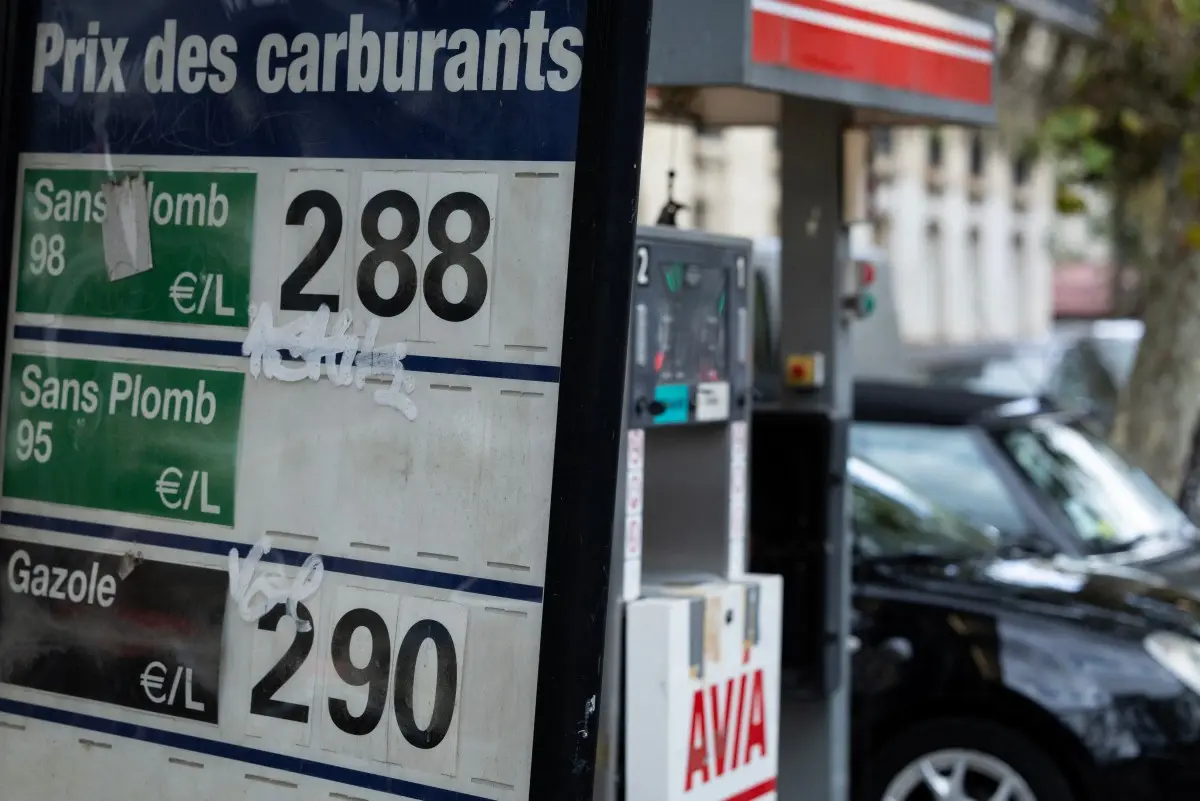
According to an AFP analysis of public data released Tuesday, average French fuel prices reached record highs.
The average price of Diesel was at €2.41/litre, the price of SP98 unleaded was at €2.27/litre and SP95-E10 unleaded petrol stood at €2.17 / litre.
Protests against rising fuel prices have already erupted, with fishermen blocking oil depots last week. Political leaders fear a resurgence of movement similar to the 2018 "Yellow Vests" (Gilets Jaunes) protests, which originally sparked over a fuel tax hike. The government has been keen to stress that the current price inflation is driven by foreign conflict, not domestic taxation.
However, the government's budget flexibility remains extremely limited due to high national debt and rising interest rates.
To counter claims that the state is benefiting from higher tax revenues, PM Sébastien Lecornu plans to propose a "golden rule" for the 2027 budget. This rule would ensure any windfall VAT revenues generated by high fuel prices are returned directly to citizens.
TELL US: How have you been affected by the rising cost of fuel in France? Explain in the comments section below.
Comments